The AI video generation landscape reached a pivotal moment in early 2026. ByteDance's Seedance 2 launched with a bold internal tagline: "Kill the game." Meanwhile, Google's Veo 3.1 continues to refine its cinematic approach to AI video creation. For creators, filmmakers, and businesses evaluating these cutting-edge tools, understanding their real-world capabilities—not just marketing claims—is essential.
This comprehensive comparison draws from extensive hands-on testing, industry benchmarks, and real user experiences to answer one critical question: which model delivers production-ready results for your specific needs?
The State of AI Video Generation in 2026
AI video generation has crossed a threshold from impressive demos to genuinely useful production tools. According to industry data, 30% of digital video ads already use generative AI, with projections reaching 39% by the end of 2026. The technology has evolved from simple text-to-video generation to sophisticated multimodal systems capable of understanding motion, physics, emotion, and narrative structure.
Both Seedance 2 and Veo 3.1 represent the current state-of-the-art, but they take fundamentally different approaches to solving the same problem: how to give creators precise control over AI-generated video content.
Seedance 2: The Multimodal Control Champion
Revolutionary Reference System
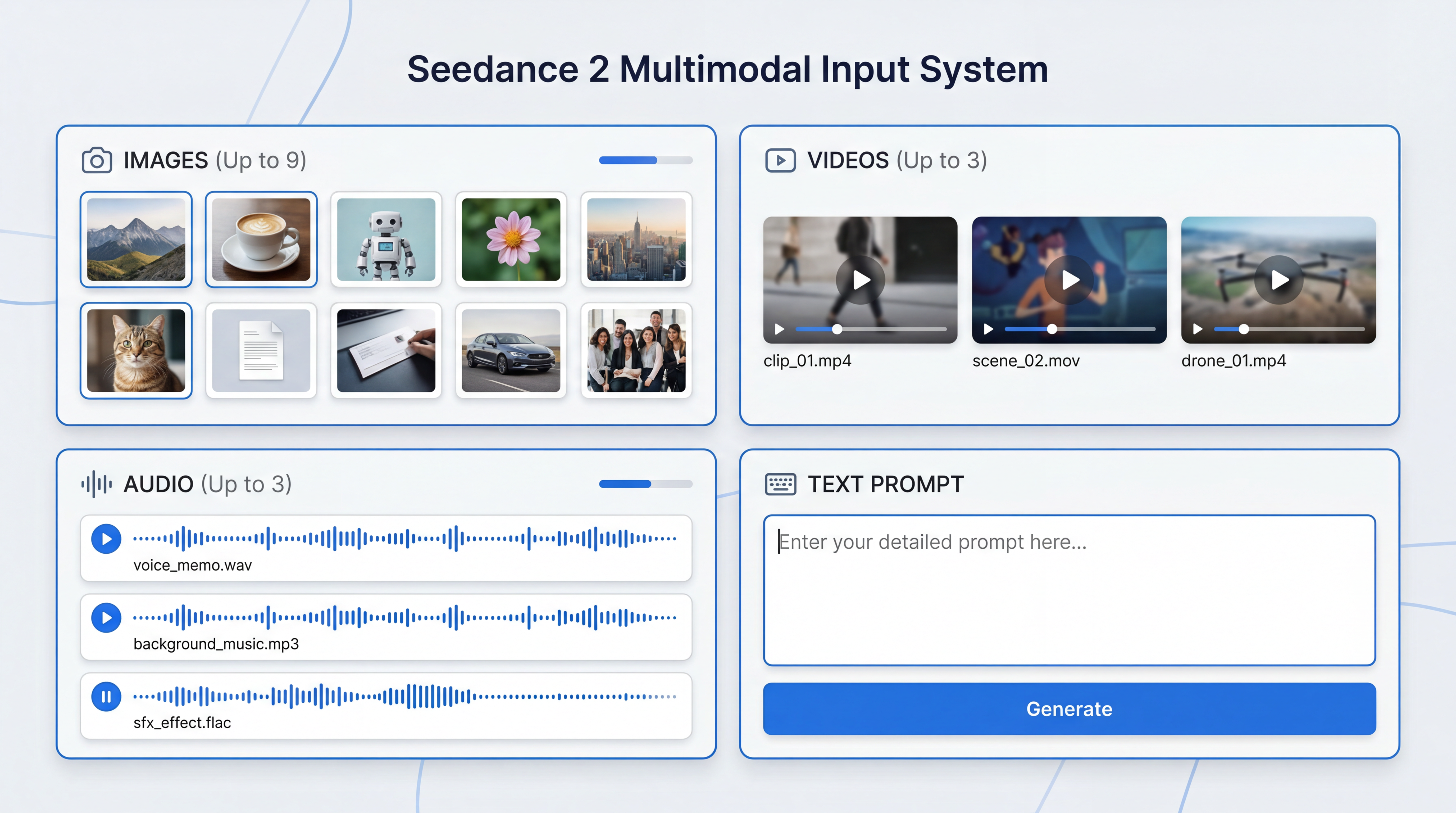
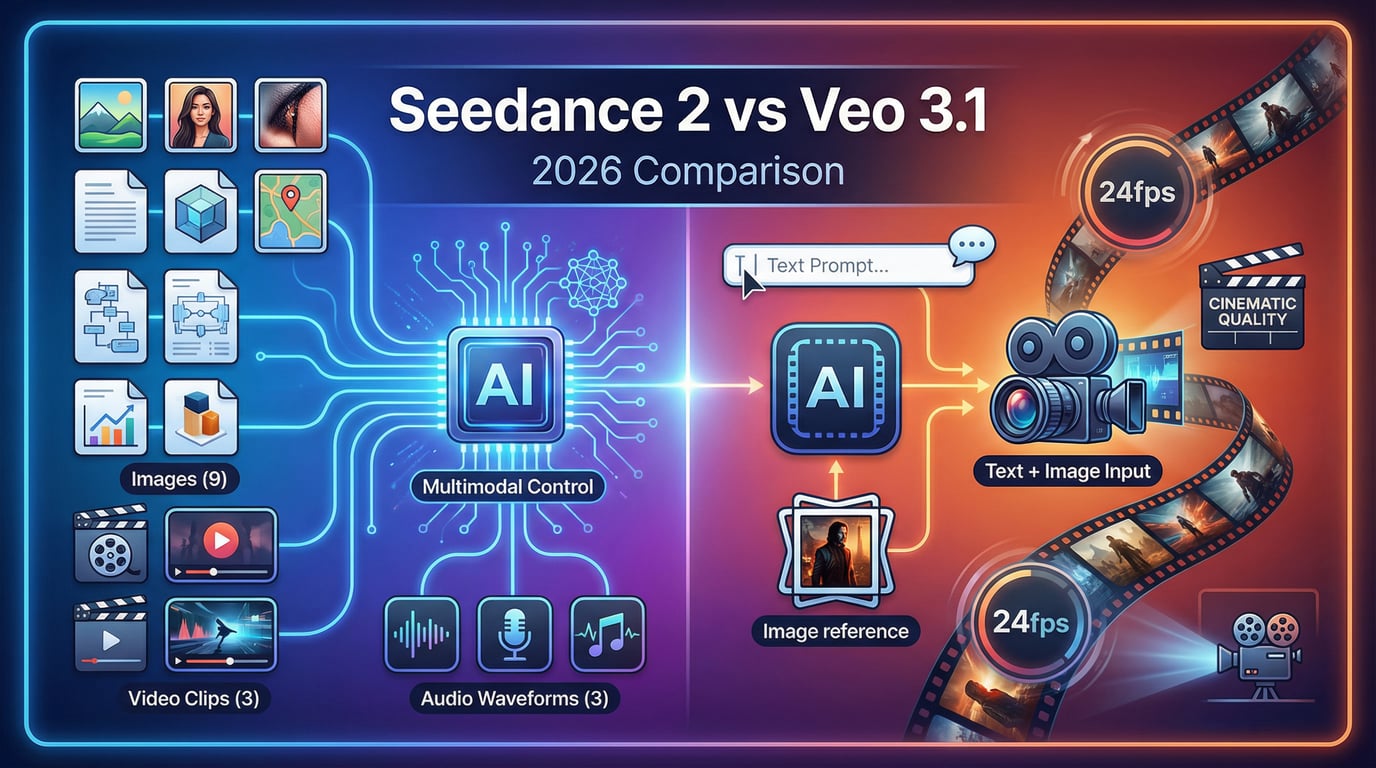
Seedance 2's most distinctive feature is its comprehensive multimodal reference capability. Unlike Veo 3.1 which primarily relies on text prompts with limited image reference support, Seedance 2 accepts up to 12 reference files simultaneously: 9 images, 3 videos, and 3 audio files. This isn't just a technical specification—it fundamentally changes how creators work with AI video generation.
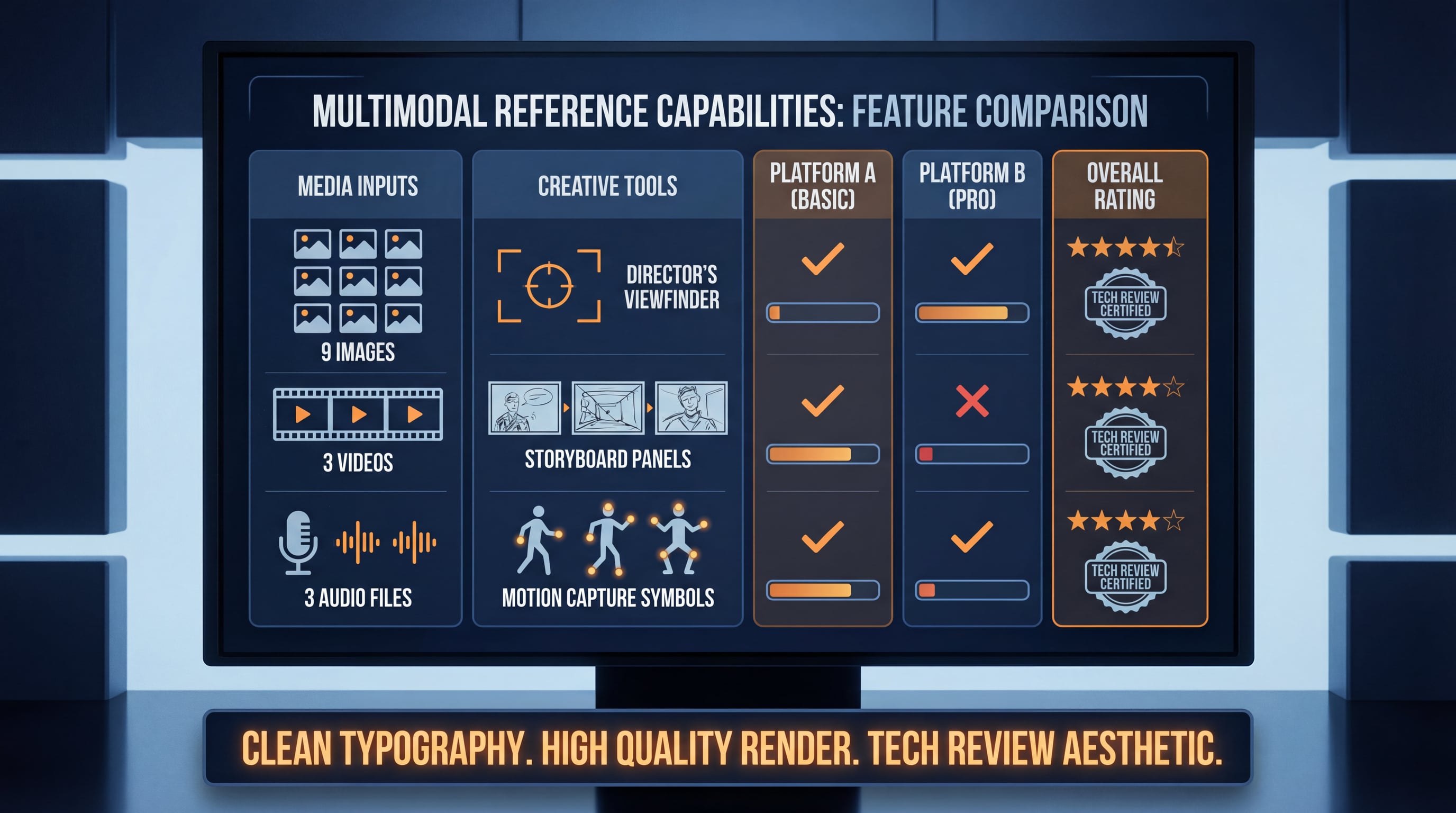
In practical testing, this multimodal approach enables unprecedented creative control. You can reference a character design image, a motion capture video for movement style, a sound effect for atmosphere, and a music track for rhythm—all in a single generation. The model intelligently synthesizes these inputs into cohesive video output. According to real-world user testing, this reference system provides "unmatched compositional control" compared to competing models.
Director-Level Capabilities
What truly sets Seedance 2 apart is its built-in "director thinking." The model automatically handles shot composition, camera movement, and scene transitions without requiring detailed technical prompts. In hands-on testing documented by industry reviewers, creators found they could describe a narrative sequence and Seedance 2 would autonomously plan multiple camera angles, transitions, and even special effects.
For example, a simple prompt like "character running through a crowded street market, knocking over a fruit stand, pursued by multiple people" generates a multi-shot sequence with automatic camera tracking, side-angle cuts, and dynamic motion—all without specifying technical cinematography terms. This represents a paradigm shift from "prompt engineering" to "story directing."
Native Audio-Visual Synchronization
Seedance 2 generates video and audio simultaneously, with frame-accurate synchronization. The system creates dialogue with lip-sync accuracy, ambient soundscapes that match visual environments, and real-time sound effects synchronized to on-screen actions. Multiple language support includes English, Chinese (Mandarin), and regional dialects like Cantonese and Sichuan dialect, with natural lip-sync for each language.
Testing revealed that character dialogue maintains emotional consistency—when a character speaks with urgency, facial expressions, vocal tone, and body language align naturally. This eliminates the traditional post-production workflow of separately generating audio and manually syncing it to video.
Storyboard and Shot List Integration
One of Seedance 2's most production-ready features is its ability to work directly from professional storyboards and shot lists. Creators can upload traditional pre-production documents—hand-drawn storyboards, shot breakdowns, or even comic panel sequences—and the model interprets these visual plans to generate corresponding video sequences.
This capability bridges the gap between traditional filmmaking workflows and AI generation. Directors and cinematographers can continue using familiar pre-production tools while leveraging AI for execution, rather than abandoning established creative processes.
Veo 3.1: The Cinematic Quality Leader
Broadcast-Ready Output Quality
Google's Veo 3.1 focuses on delivering cinema-standard visual quality. The model outputs at 24 frames per second—the film industry standard—rather than the 30fps common in consumer video. This technical choice gives Veo 3.1 output an inherently more "cinematic" feel that requires no post-processing frame rate adjustment.
In benchmark comparisons, Veo 3.1 consistently scores highest for lighting accuracy, texture detail, and overall visual polish. Independent testing shows that Veo 3 (the foundation for 3.1) achieved the highest scores across evaluation dimensions including realism, lighting accuracy, and brand detail preservation.
Superior Prompt Adherence
Veo 3.1's standout strength is its ability to accurately follow complex text prompts. In comparative evaluations using the MovieGenBench dataset, Veo 3.1 performed best on prompt accuracy, with human evaluators consistently rating its outputs as most faithful to the input description.
This prompt adherence extends to subtle details: specific camera angles, precise lighting conditions, exact color palettes, and nuanced emotional tones. For creators who prefer working primarily with text descriptions rather than visual references, Veo 3.1's natural language understanding represents a significant advantage.
Professional Integration Ecosystem
Veo 3.1 benefits from deep integration with Google's professional creative ecosystem. It's accessible through Google Gemini Advanced, Google Vids for editing workflows, and enterprise-grade deployment through Vertex AI. For production studios and agencies already using Google Cloud infrastructure, this integration reduces technical friction and enables seamless workflow incorporation.
Companies like Promise Studios use Veo 3.1 within production platforms for generative storyboarding and previsualization at production quality. This enterprise adoption indicates that Veo 3.1 has crossed the threshold from experimental technology to production-ready tool for professional workflows.
Physics and Motion Consistency
While multiple models now handle basic physics reasonably well, Veo 3.1 demonstrates particular strength in maintaining physical consistency across longer sequences. Objects maintain proper weight and momentum, lighting changes naturally as camera angles shift, and environmental interactions follow realistic physical rules.
This physics accuracy makes Veo 3.1 particularly suitable for product demonstrations, architectural visualizations, and any content where physical realism is non-negotiable.
Head-to-Head Performance Comparison
Generation Quality and Success Rate
Real-world testing reveals a critical difference in usability: generation success rate. Traditional AI video models typically achieve 15-20% usable output, meaning creators must generate the same clip 5+ times to get acceptable results. This "gacha" approach inflates real costs dramatically.
According to extensive user testing, Seedance 2 achieves approximately 80-90% usable output on first generation. Users report that most generations require minimal or no regeneration, fundamentally changing the economics of AI video production. Veo 3.1 also demonstrates high success rates, though specific figures vary by use case—its strength lies in consistency for straightforward prompts rather than complex multimodal scenarios.
Feature Comparison Matrix
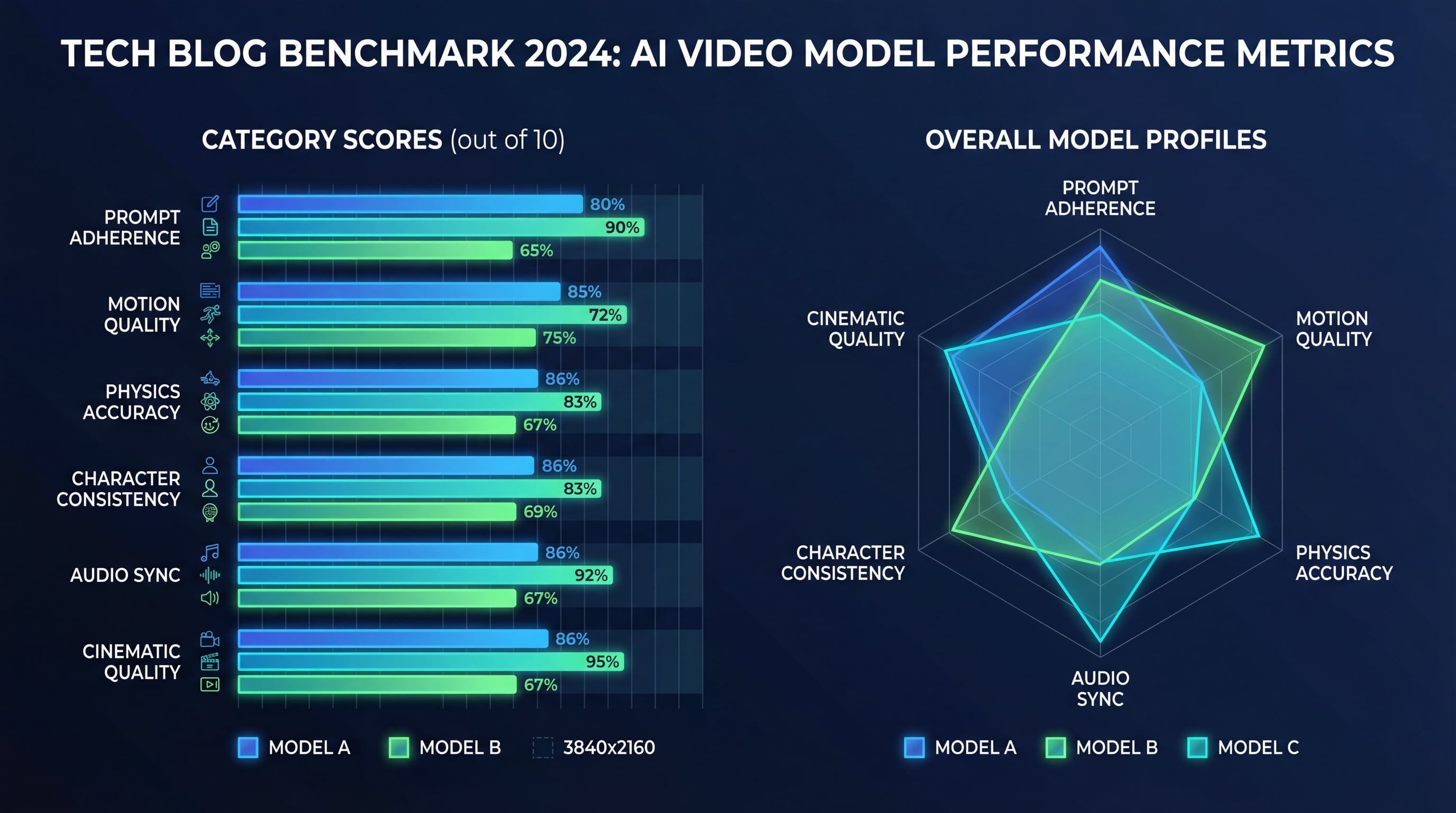
| Feature | Seedance 2 | I see 3.1 |
|---|---|---|
| Maximum Duration | 15 seconds per generation | 8 seconds per generation |
| Resolution | 1080p | Up to 4K (1080p standard) |
| Frame Rate | 30fps | 24fps (cinema standard) |
| Input Types | Text + 9 images + 3 videos + 3 audio | Text + limited image reference |
| Native Audio Generation | Yes, with lip-sync | Yes, synchronized |
| Language Support | 8+ languages including dialects | Multiple languages |
| Automatic Shot Planning | Yes, multi-shot sequences | Single shot focus |
| Storyboard Input | Yes, direct interpretation | No |
| Video Extension | Yes, seamless continuation | Limited |
| Prompt Adherence | Strong | Excellent (benchmark leader) |
| Physics Accuracy | Strong | Excellent |
| Character Consistency | Excellent across shots | Strong within single shot |
Real-World Use Case Performance
Short-Form Social Content: Comparative testing shows Seedance 2 excels for social media creators who need to rapidly iterate on trending formats. Its ability to reference existing viral videos and recreate them with custom characters or styles enables efficient trend-jacking. The 15-second duration aligns perfectly with TikTok, Instagram Reels, and YouTube Shorts.
Commercial and Product Videos: Veo 3.1's superior lighting and texture rendering makes it ideal for product demonstrations and commercial advertising where visual polish is paramount. Its prompt adherence ensures brand guidelines and specific product features are accurately represented.
Narrative Storytelling: Seedance 2's multi-shot capability and character consistency across sequences makes it the clear choice for narrative content. The ability to maintain the same character across multiple 15-second generations enables coherent story arcs up to 60+ seconds with simple concatenation.
Cinematic B-Roll: Veo 3.1's 24fps output and cinematic color grading make it ideal for supplemental footage in professional productions. The visual quality integrates seamlessly with traditionally shot footage.
Motion and Animation Quality
Community comparisons on Reddit highlight Seedance 2's advancement in facial expressions and character mannerisms. Users note that Seedance 2 "moves beyond the robotic acting style of other AI video models," with natural micro-expressions and body language that convey genuine emotion.
Veo 3.1 maintains strong motion quality with particular excellence in camera movements and environmental motion (wind, water, particle effects). However, for character-driven content requiring expressive performance, Seedance 2 demonstrates a measurable advantage.
Production Workflow Integration
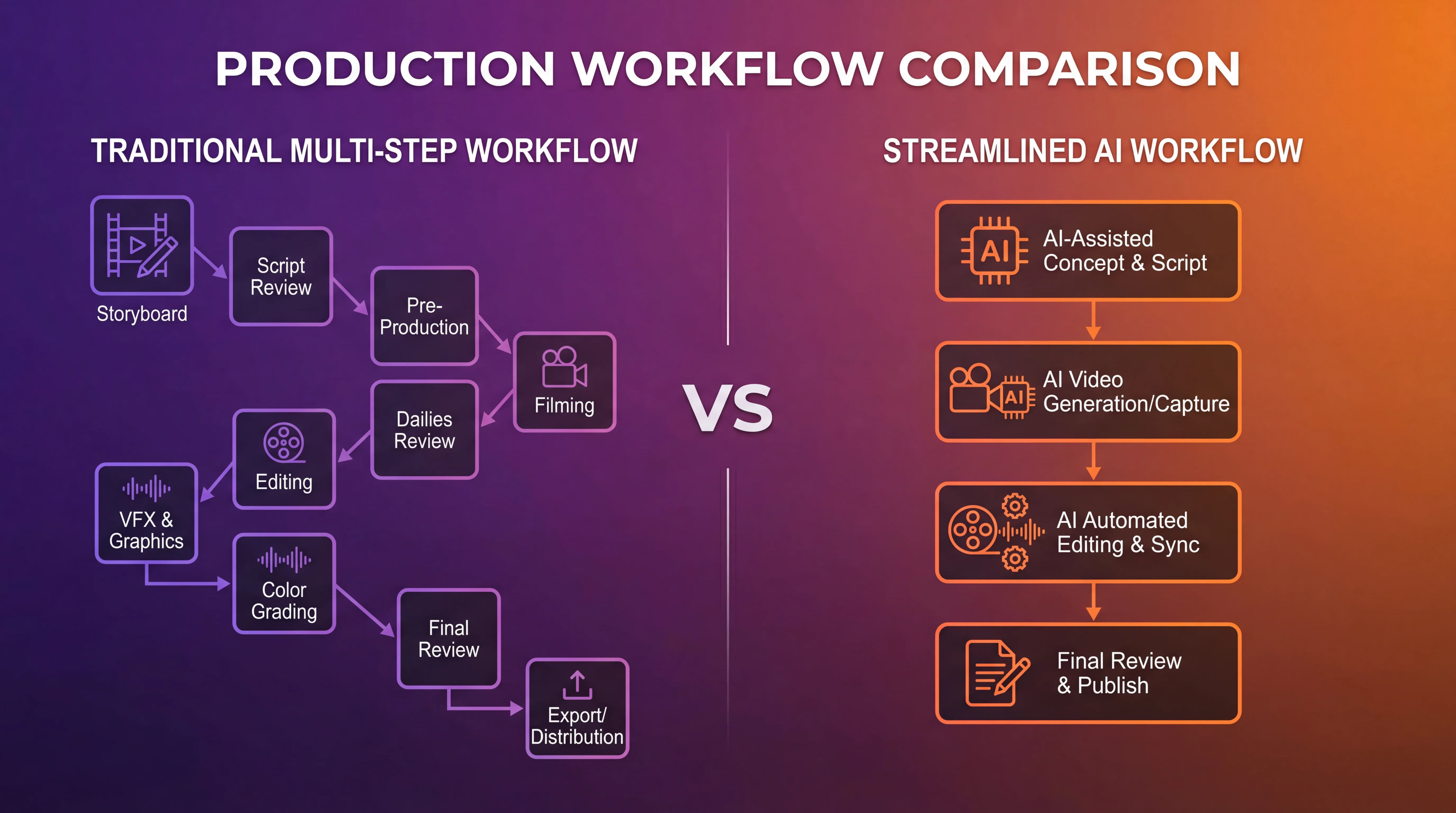
Seedance 2 Workflow Advantages
Seedance 2's design philosophy centers on reducing the gap between creative intent and final output. The multimodal reference system means creators can communicate their vision through any combination of media that makes sense for their project. This flexibility accommodates diverse creative backgrounds—you don't need to be a skilled prompt engineer to achieve professional results.
The automatic shot planning and scene composition capabilities mean Seedance 2 functions more like a collaborative creative partner than a simple generation tool. For small teams or solo creators without dedicated cinematographers, this built-in expertise dramatically expands creative possibilities.
Video extension and editing capabilities enable iterative refinement. If a generated sequence is 80% perfect, creators can extend it, modify specific sections, or blend multiple generations—all within the same workflow. This iterative approach mirrors traditional creative processes better than single-shot generation models.
Veo 3.1 Workflow Advantages
Veo 3.1's integration with Google's ecosystem provides significant workflow benefits for teams already using Google Workspace and Cloud services. The ability to generate video directly within Google Vids, access through Gemini chat interfaces, or deploy via Vertex AI for custom applications reduces technical barriers to adoption.
For enterprise users, Veo 3.1's API access through Google Cloud enables programmatic generation at scale. Marketing teams can automate video variant creation, e-commerce platforms can generate product videos dynamically, and content platforms can offer AI video features to end users—all with enterprise-grade reliability and support.
The model's strong prompt adherence also simplifies workflow for text-oriented creators. Writers and marketers can describe desired videos in natural language without needing to source reference materials or learn complex multimodal input systems.
Cost Analysis and Production Economics
Direct Generation Costs
Cost per generation varies significantly based on complexity and duration:
Seedance 2: Approximately $0.60 per 10-second generation for basic image-to-video. Adding video references increases cost to approximately $1.30-1.50 per generation due to additional computational requirements. The platform uses a credit system where 10 credits equal $1 USD.
I see 3.1: Approximately $0.40 per second with audio through API access ($3.20 for 8 seconds). The Veo 3.1 Fast variant costs $0.15 per second for faster generation with slightly reduced quality. Consumer access through Gemini Advanced subscription ($19.99/month) includes generation credits.
True Production Cost: The Success Rate Factor
Direct generation costs tell only part of the story. The critical economic factor is success rate—the percentage of generations that are actually usable without regeneration.
Traditional AI video models with 20% success rates mean real costs are 5x the nominal generation price. If a generation costs $0.50 but you need to generate 5 times to get a usable result, your true cost is $2.50 per usable video.
With Seedance 2's reported 80-90% success rate, real costs closely approximate nominal costs. For a 90-second project requiring six 15-second segments, theoretical cost might be $5.40 (6 × $0.90), but real cost is approximately $6-7 accounting for occasional regenerations. The same project with a 20% success rate model could cost $27-30 in practice.
This cost efficiency transforms project economics. A short film requiring 100 video segments becomes economically feasible for independent creators where it would be prohibitively expensive with lower success rates.
Time Economics
Generation speed impacts production timelines significantly. Seedance 2 generations typically complete in 2-3 minutes for standard complexity. Veo 3.1 standard mode takes 3-5 minutes, while Veo 3.1 Fast reduces this to under 2 minutes with some quality tradeoff.
However, the more significant time factor is iteration cycles. High success rates mean fewer regenerations, dramatically reducing total production time. A project that requires 50 regenerations across 100 segments adds 100-250 minutes of pure waiting time compared to a project with 10 regenerations.
Access and Platform Availability
Seedance 2 Access
Seedance 2 is currently available through ByteDance‘s JiMeng (即梦) platform, with gradual rollout to users. The model requires a paid subscription (starting at approximately 69 CNY) for full access. Integration with other platforms is expanding, with some third-party AI video platforms beginning to offer Seedance 2 access.
For international users,Seedance AI provides convenient access to Seedance 2 alongside multiple other cutting-edge video and image generation models. This unified platform approach eliminates the need to manage multiple subscriptions and learn different interfaces—creators can access Seedance 2, compare it with other models, and choose the best tool for each specific project.
I see 3.1 Access
Veo 3.1 is accessible through several Google channels:
-
Gemini Advanced: Consumer subscription at $19.99/month includes Veo 3.1 access with monthly generation credits
-
Google Vids: Integrated video editing and generation workflow
-
Vertex AI: Enterprise API access for custom applications and scaled deployment
-
Third-party platforms: Some AI video platforms offer Veo 3.1 through partnerships
The multiple access points provide flexibility for different user types, from individual creators to enterprise development teams.
Real User Experiences and Community Reception
Industry Professional Feedback
The response from professional creators has been notably enthusiastic for both models, but with different emphases. Film industry professionals highlight Veo 3.1's visual quality and integration with professional workflows. One cinematographer noted that Veo 3.1 output "integrates seamlessly with traditionally shot footage" due to its 24fps frame rate and color science.
For Seedance 2, the excitement centers on creative control and production efficiency. Content creators report that the multimodal reference system "feels like working with a trained cinematographer, not an AI model." The ability to show the AI what you want rather than describing it in text resonates strongly with visually-oriented creators.
Social Media Creator Adoption
Short-form content creators have rapidly adopted Seedance 2 for its template remixing capabilities. The ability to reference trending video formats and recreate them with custom characters or styles enables rapid trend participation—a critical factor for social media success.
One TikTok creator reported that Seedance 2 "10x'd my content output" by enabling quick adaptation of viral formats with original characters and storylines. This use case—trend remixing rather than pure original creation—represents a significant practical application that wasn't anticipated in early AI video development.
Animation and Motion Graphics
The animation community has shown particular interest in Seedance 2's special effects and motion capabilities. Anime and motion graphics creators report that the model can replicate complex effects sequences (energy blasts, transformation sequences, dynamic action scenes) that would traditionally require specialized animation skills and significant time investment.
User testing documented in industry reviews shows that a 15-second anime-style action sequence with character power-up, special effects, and dynamic camera work can be generated in a single attempt with Seedance 2—content that might take a skilled animator several hours to produce traditionally.
Technical Limitations and Challenges
Seedance 2 Limitations
Text Rendering: Chinese text rendering in generated videos sometimes produces garbled or incorrect characters. This is a known limitation that ByteDance is addressing, though English text handling is generally more reliable.
Generation Speed: While success rates are high, generation time can be slower than some competitors, particularly for complex multimodal inputs. The 2-3 minute wait per generation can feel lengthy when iterating on creative ideas.
Content Moderation: The platform employs strict content filtering that sometimes flags innocuous prompts as policy violations. Users report frustration with unclear moderation guidelines and difficulty understanding which specific terms triggered rejections.
Celebrity and Public Figure Restrictions: Strict limitations on generating content featuring recognizable public figures, likely due to copyright and likeness rights concerns. This limits some creative applications and news/documentary use cases.
Veo 3.1 Limitations
Duration Constraints: The 8-second maximum generation length requires stitching for longer content. While this is manageable, it adds workflow complexity and can create visible seams between segments if not carefully managed.
Text-Centric Input: Veo 3.1 primarily relies on text prompts with limited image reference support, lacking the comprehensive multimodal input system of Seedance 2. While it accepts image references for style or composition guidance, it cannot process video references for motion patterns or audio files for sound design. Creators who prefer showing the AI their vision through multiple reference types rather than describing everything in text may find this limiting.
Experimental Status: Some Veo 3.1 features remain in experimental rollout, with certain capabilities still running on the older Veo 2 architecture. This creates inconsistency in feature availability and performance.
"AI Look" Artifacts: While visual quality is generally excellent, some generations exhibit a characteristic "AI-generated" aesthetic that can be difficult to eliminate. This is particularly noticeable in human faces and complex textures.
The Broader Competitive Landscape
How They Compare to Other Leading Models
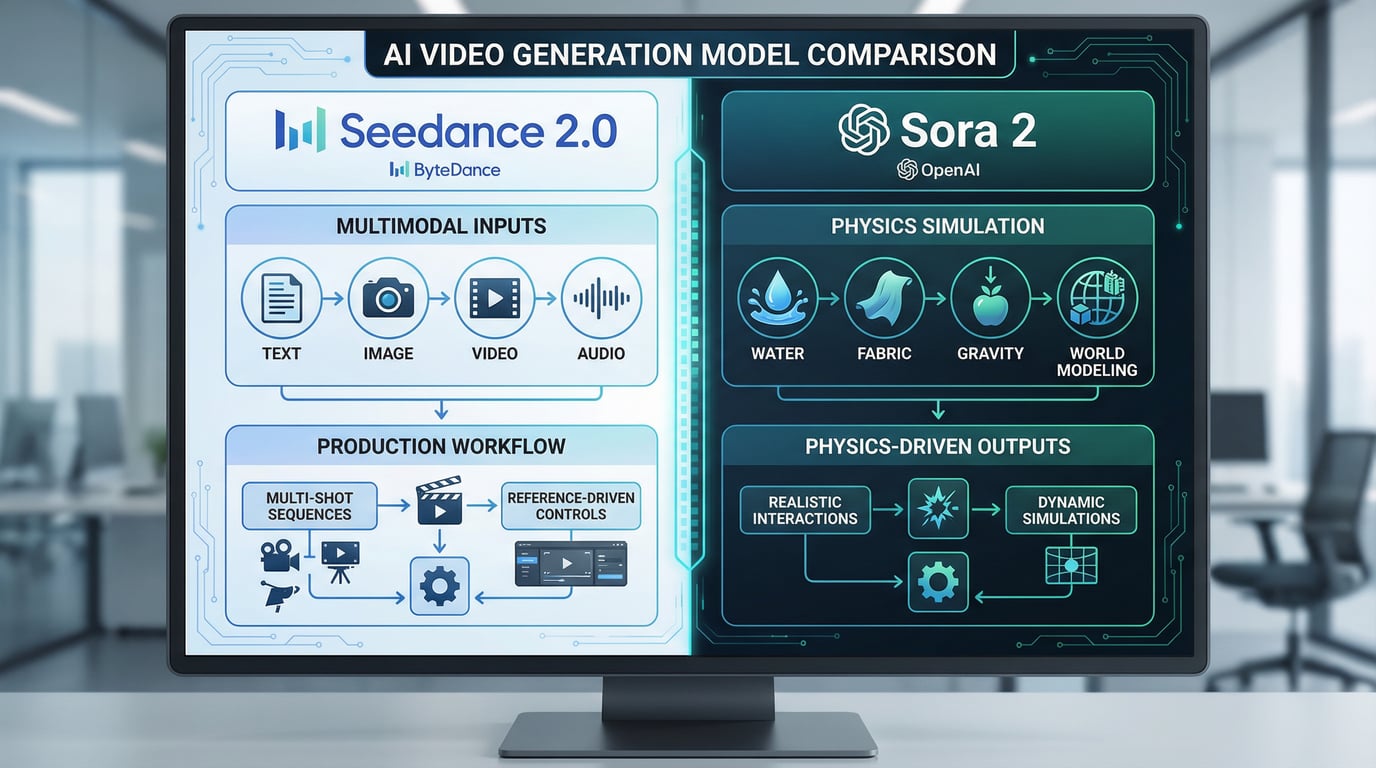
Both Seedance 2 and Veo 3.1 exist in a competitive ecosystem including OpenAI's Sora 2, Kuaishou's Kling 3.0, and Runway's Gen-4.5. Comprehensive benchmark testing reveals distinct strengths:
-
Sora 2: Leads in physics accuracy and temporal consistency, ideal for realistic simulations
-
Kling 3.0: Best cost-efficiency and motion quality balance for straightforward generation
-
Runway Gen-4.5: Top benchmark scores for overall quality, excellent for professional post-production
-
Seedance 2: Unmatched multimodal control and editing flexibility
-
I see 3.1: Superior cinematic aesthetics and broadcast-ready output
The Multi-Model Strategy
Professional production teams increasingly adopt a multi-model approach, using different AI video generators for different project phases or content types. Seedance 2 for rapid prototyping and template-based work, Veo 3.1 or Sora 2 for final high-quality deliverables, and Kling 3.0 for cost-effective bulk generation.
Seedance AIenable this multi-model strategy by providing unified access to multiple cutting-edge models. Rather than committing to a single model's strengths and limitations, creators can leverage the best tool for each specific task within a single workflow.
Future Trajectory and Industry Impact
The "ChatGPT Moment" for Video
Industry observers describe Seedance 2's launch as the "ChatGPT moment" for AI video generation—the point where the technology crosses from impressive demo to genuinely useful tool that changes how work gets done. Just as ChatGPT made AI writing assistance mainstream, Seedance 2's combination of quality, control, and usability makes AI video generation practical for everyday creative work.
This threshold crossing has significant implications. The barrier to video content creation—traditionally requiring expensive equipment, technical skills, and significant time investment—has dropped dramatically. A solo creator with a good story and basic AI literacy can now produce content that rivals small production teams.
Impact on Traditional Production
The cost and time efficiency of AI video generation is already disrupting traditional production economics. Short-form content that might cost $5,000-10,000 to produce traditionally can now be created for under $100 in AI generation costs. A 90-minute project requiring extensive special effects might cost $10,000-15,000 in AI generation versus hundreds of thousands for traditional VFX.
This isn't purely displacement—it's also expansion. Content that was economically infeasible becomes viable. Niche audiences too small to justify traditional production budgets can now be served profitably. Rapid A/B testing of creative concepts becomes practical where it was previously impossible.
The Shift to Creative Skills
As technical execution becomes automated, the competitive advantage shifts to creative skills: storytelling, aesthetic judgment, emotional resonance, and cultural understanding. The ability to craft compelling narratives and make sophisticated creative decisions becomes more valuable as the technical barrier to execution drops.
This mirrors the evolution of other creative tools. Desktop publishing didn't eliminate the need for designers—it eliminated the need for typesetting technicians and elevated the importance of design thinking. AI video generation is eliminating the need for technical execution specialists while elevating the importance of creative vision.
Practical Recommendations
Choose Seedance 2 If You:
-
Need precise creative control through visual references rather than text descriptions
-
Create character-driven narrative content requiring consistency across multiple shots
-
Work with trending formats and need to rapidly remix viral templates
-
Produce social media content where 15-second segments are ideal
-
Want built-in director-level shot planning and composition
-
Need native audio generation with lip-sync for dialogue content
-
Value high success rates to minimize regeneration costs and time
Choose Veo 3.1 If You:
-
Prioritize maximum visual quality and cinematic aesthetics
-
Need 24fps output for integration with traditional film production
-
Work primarily with text descriptions and prefer prompt-based workflows
-
Require enterprise-grade deployment through Google Cloud infrastructure
-
Create product demonstrations or commercial content where lighting and texture accuracy are critical
-
Need seamless integration with Google Workspace and existing Google Cloud workflows
-
Value strong prompt adherence for precise specification of visual details
Consider a Multi-Model Approach If You:
-
Run a production studio or agency with diverse client needs
-
Want to optimize cost-efficiency by using the best tool for each task
-
Need to rapidly prototype concepts before final high-quality generation
-
Work on complex projects where different scenes have different technical requirements
Seedance AI make this multi-model approach practical by providing unified access to Seedance 2, Veo 3.1, and other leading models through a single interface and subscription.
Conclusion: Two Paths to the Same Future
Seedance 2 and Veo 3.1 represent two philosophically different approaches to AI video generation, both pointing toward the same future: a world where creating professional-quality video content is as accessible as writing text or creating images.
Seedance 2's multimodal control philosophy empowers creators who think visually and want to show the AI their creative vision through references. Its director-level automation and high success rates make it immediately practical for production work, particularly for creators without traditional filmmaking backgrounds.
Veo 3.1's cinematic quality focus and strong prompt adherence serve creators who prefer text-based workflows and need maximum visual polish. Its integration with Google's professional ecosystem makes it particularly attractive for enterprise deployment and teams already invested in Google Cloud infrastructure.
Neither model is definitively "better"—they excel in different dimensions that matter differently depending on your specific use case, creative process, and production requirements. The rapid pace of development means both models will continue evolving, likely incorporating each other's strengths over time.
What's certain is that AI video generation has crossed the threshold from experimental technology to production-ready tool. The question is no longer whether AI can generate usable video, but which AI model best fits your creative workflow and project requirements.
For creators ready to explore these cutting-edge capabilities, the time to start experimenting is now. The learning curve is real but manageable, and the creative possibilities are genuinely transformative. Whether you choose Seedance 2's multimodal control or Veo 3.1's cinematic quality—or leverage both through a unified platform—you're participating in a fundamental shift in how video content gets made.
The future of video creation isn't human or AI—it's human creativity amplified by AI capability. Both Seedance 2 and Veo 3.1 are powerful tools in that collaborative future.